What is a VRF system, and what are its advantages?
Managing temperature across large buildings often comes with challenges. Traditional systems struggle to maintain a uniform climate throughout the entire space while consuming significant amounts of energy. To overcome these limitations, VRF (Variable Refrigerant Flow) technology was developed.
A VRF system is a modern, centralized heating and cooling solution consisting of one or more indoor and outdoor units that precisely regulate the flow of refrigerant. This allows different temperature modes to be activated and maintained simultaneously in separate areas of a building — for example, you can cool one part of an office while heating another.
How Does a VRF System Work?
A VRF system operates on a simple yet highly efficient principle:
During cooling, indoor units absorb heat from the rooms and release it outdoors through the outdoor unit.
During heating, the process is reversed — heat is absorbed from outside and distributed indoors.
The system’s operation is based on two key components — the inverter compressor and the electronic expansion valve (EXV). Unlike conventional systems that work on an on/off cycle, the VRF continuously adjusts power and refrigerant volume. When a particular zone requires more heating or cooling, the compressor and EXV automatically adjust performance levels, eliminating temperature fluctuations.
This is the same advanced inverter-based technology used in modern air conditioners, refrigerators, and other energy-efficient appliances.
Heat Recovery Function
A particularly innovative feature of VRF systems is Heat Recovery. For example, if one area of a building requires cooling while another needs heating, the system does not waste the heat generated during cooling — it captures and redirects it to where heating is needed. This recirculation of energy reduces overall consumption by 30–40% compared to traditional systems.
Managing this complex process is made possible only through advanced sensing and control technology.
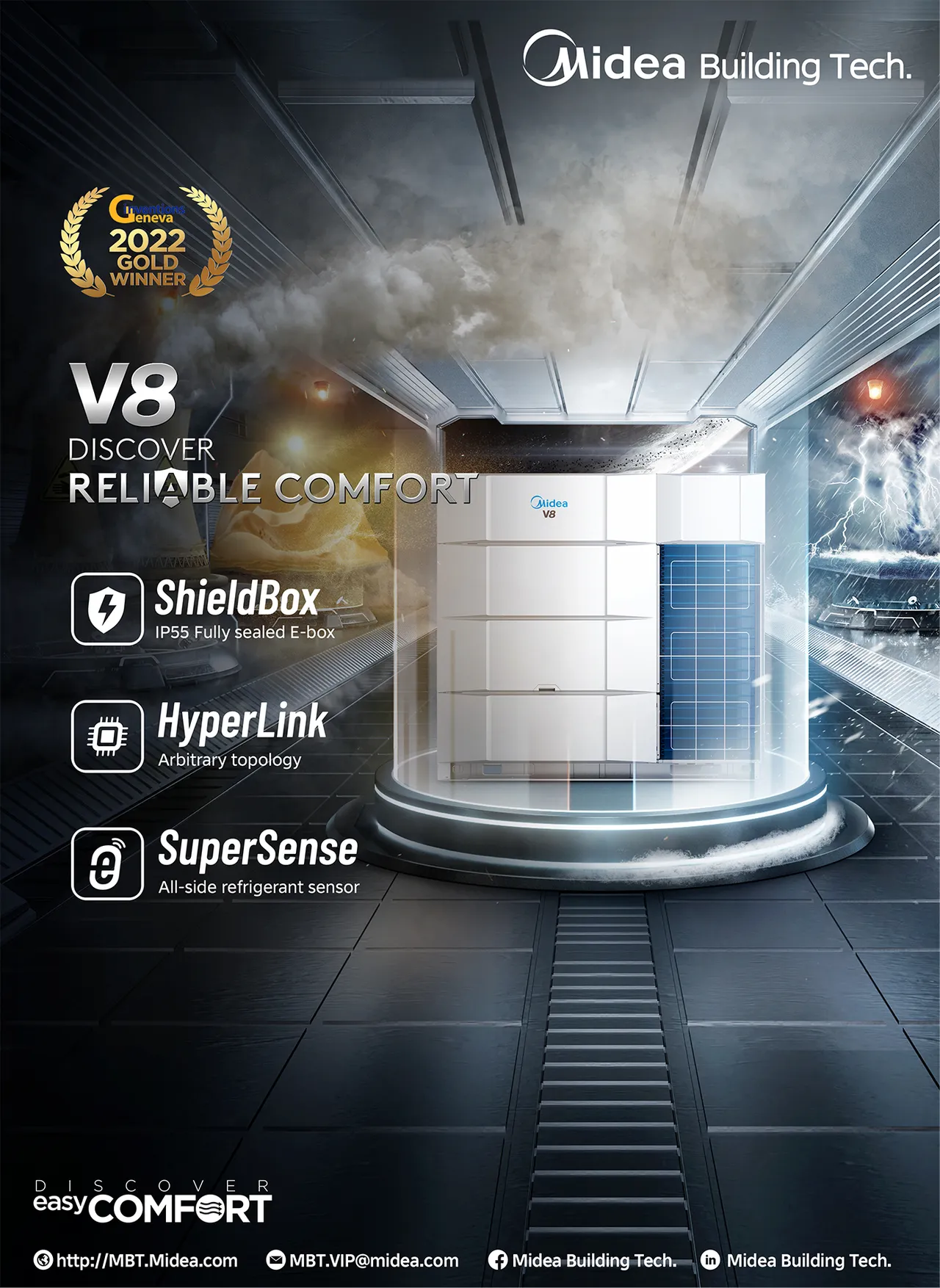
Midea’s V8 Series VRF systems, for instance, incorporate SuperSense technology with up to 19 sensors, monitoring refrigerant conditions in real time to ensure maximum accuracy and performance.
Advantages of a High-Tech Heating and Cooling System
Because of these advanced capabilities, VRF systems are ideal for hotels, office buildings, residential complexes, hospitals, educational institutions, and industrial facilities.
The rapid adoption of this technology is driven by several key advantages:
Energy Efficiency
Thanks to the absence of large air ducts, inverter compressors, and the heat recovery process, VRF systems consume 30–40% less energy than conventional HVAC solutions.
In Midea’s V8 Series, the META 2.0 algorithm and standby power reduction to as low as 3.5 watts make energy performance even more impressive.High Comfort Level
Each zone can be individually heated or cooled, providing the exact temperature preferences for every occupant. Midea enhances this comfort further with Zen Air 2.0 technology, which offers seven fan speeds and multiple ultra-quiet modes — maintaining a perfectly calm and productive environment.Reliable Performance in Extreme Conditions
Midea’s VRF systems operate stably in both harsh cold and extreme heat, thanks to the Enhanced Vapor Injection (EVI) compressor and advanced refrigerant cooling design. They can function in heating mode down to –30°C and in cooling mode up to +50°C.Architectural Flexibility
For architects and designers, VRF systems offer great freedom. Instead of bulky air ducts, they use small-diameter refrigerant pipes that can be easily concealed in ceilings or walls.
With a wide range of indoor unit types — including ceiling cassette models — the system integrates seamlessly into any interior design.
The Midea V8 Series allows pipe runs of up to 1,100 meters, enabling outdoor units to be installed in less visible or less valuable areas of a building.
Installation and Maintenance of VRF Systems
The efficiency of a VRF system depends heavily on professional installation and proper maintenance. Because it’s a complex, high-tech system, installation must be carried out by specialists following the manufacturer’s exact recommendations.
During installation, special attention is paid to the piping network — using high-quality pipes that are precisely welded with specialized equipment. Once piping is complete, the network is pressure-tested for leaks and then vacuumed to remove air and moisture.
After assembly, the system enters the commissioning and programming phase, where each component (outdoor unit, indoor unit, controller) receives a unique digital address, enabling communication across the network.
Traditional systems typically follow a rigid wiring layout, connecting units in a single sequence. Midea, however, has developed a HyperLink technology that supports multiple wiring methods — Tree, Star, or Ring — offering flexible installation according to the building’s architecture and minimizing connection errors.
To ensure long-term performance, regular maintenance is essential — typically twice a year, before the start of each season. Service includes cleaning filters, checking electrical components, and inspecting pipelines.
Midea simplifies maintenance with integrated diagnostic features, such as automatic refrigerant charging and advanced monitoring tools. The Doctor M 2.0 system and Bluetooth module allow technicians to access complete system data via smartphone — without opening the outdoor unit.
The VRF system is a highly efficient, intelligent, and flexible heating and cooling solution with numerous advantages. However, its installation and setup require specialized expertise.
With the extensive experience of Midea Caucasus, we are fully equipped to design, install, and maintain VRF systems that deliver long-lasting performance and maximum comfort.

Gallery